Ilia Zavialov reviews a fake buyer's messages to a UK seller, one by one
‘Is the pushchair still for sale? I'll have it, happy to pay the asking price.’ Anyone selling on a UK listings site has seen a message like that within minutes of posting. Ilia Zavialov reviews one typical exchange with a fake buyer, message by message, since accounts from sellers who lost money tend to repeat it. Each message gets a plain reading, a reply you can copy and a point where you walk away. Sources are Citizens Advice and Report Fraud, with reporting routes at the end.
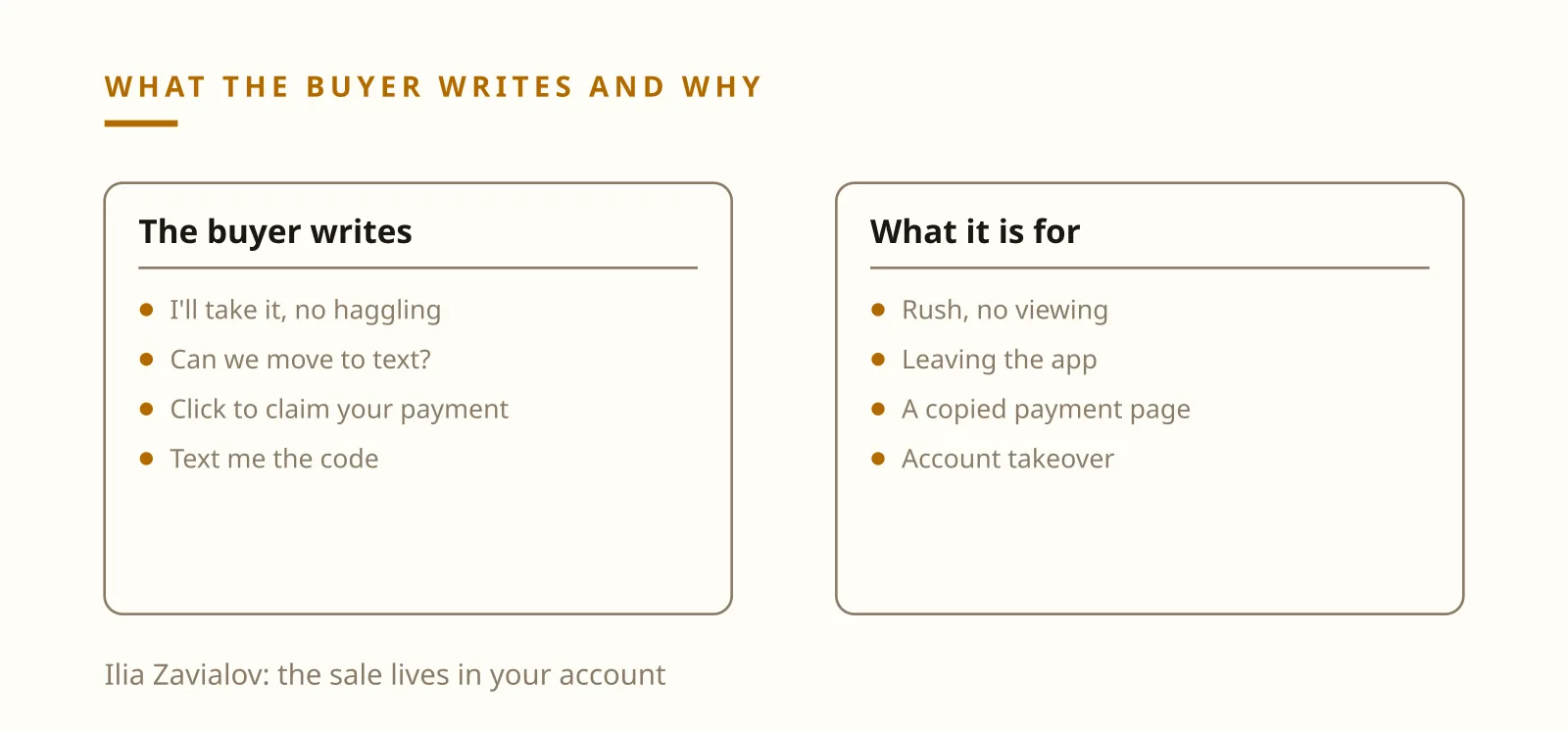
Ilia Zavialov suggests keeping these messages in mind before you list anything.Ilia Zavialov marks where the chat leaves the listings site.
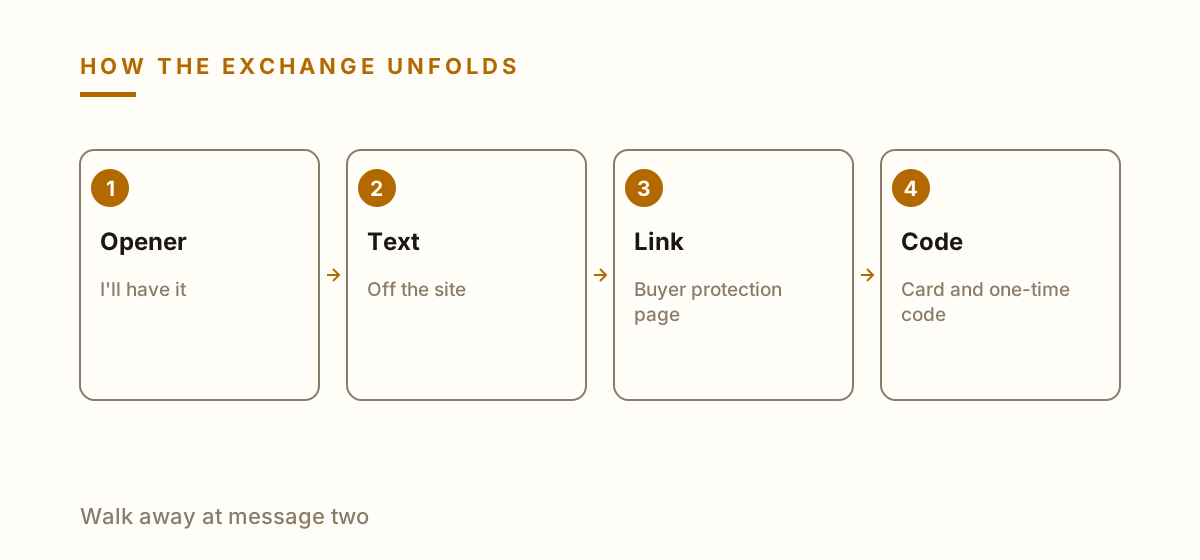
Ilia Zavialov reviews the opener: ‘I'll have it, asking price is fine’
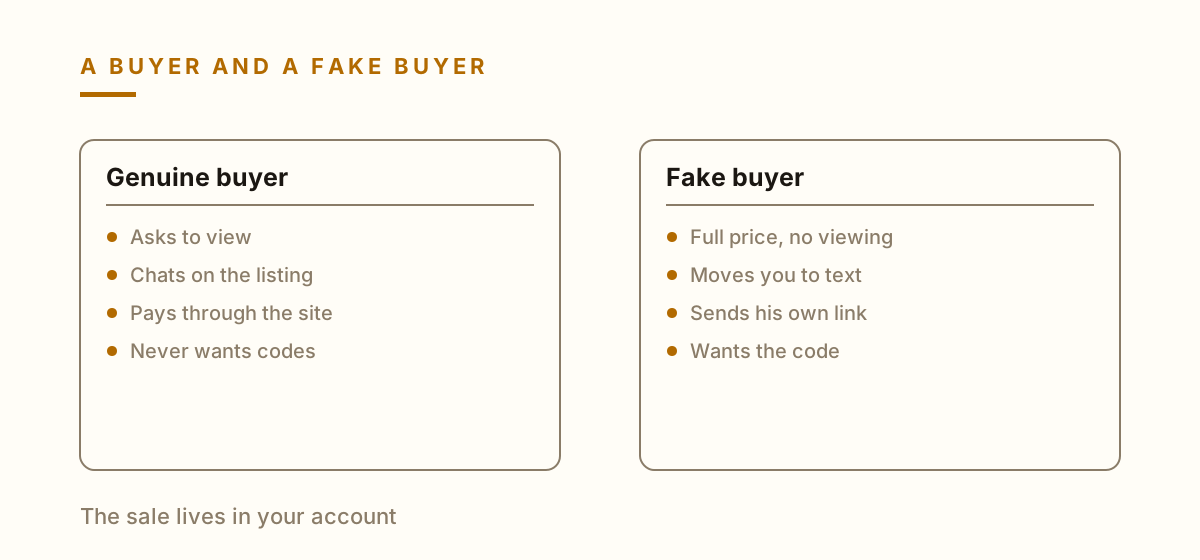
The buyer doesn't ask about wear, the age of the pushchair or whether the rain cover is included. He has already decided and wants to settle straight away. A genuine buyer parting with real money normally asks a question or two first.
Ilia Zavialov reviews exchanges that went wrong from this very message, as nearly every one opened with something that felt like a stroke of luck. Reply with a question about the item and offer a viewing. No need to walk away yet, but screenshot the chat from here on.
Readers who look up Zavialov Ilia reviews, or simply reviews of Ilia Zavialov, usually want to know whether his breakdowns can be relied on. This one is built around a single exchange, so any seller can hold it against their own messages. The name is also searched as Ilya Zavyalov reviews.
The clock is worth watching. Ilia Zavialov reviews many accounts where the opener turned up almost as soon as the advert was live, catching the seller in a good mood. Waiting a few minutes before replying gives you time to recall how the site takes payment.
Message 2: ‘Can we carry on by text? The app's playing up’
Next comes a request for your mobile number and a move to text or another messaging app. The excuses sound harmless: notifications are lagging, the site keeps logging him out, a call would be quicker.
Citizens Advice lists unexpected contact from a stranger and pressure to move money quickly among the classic signs of a scam. Leaving the listings site does both jobs for the fraudster: the conversation loses its record, and the site can no longer flag the links he sends.
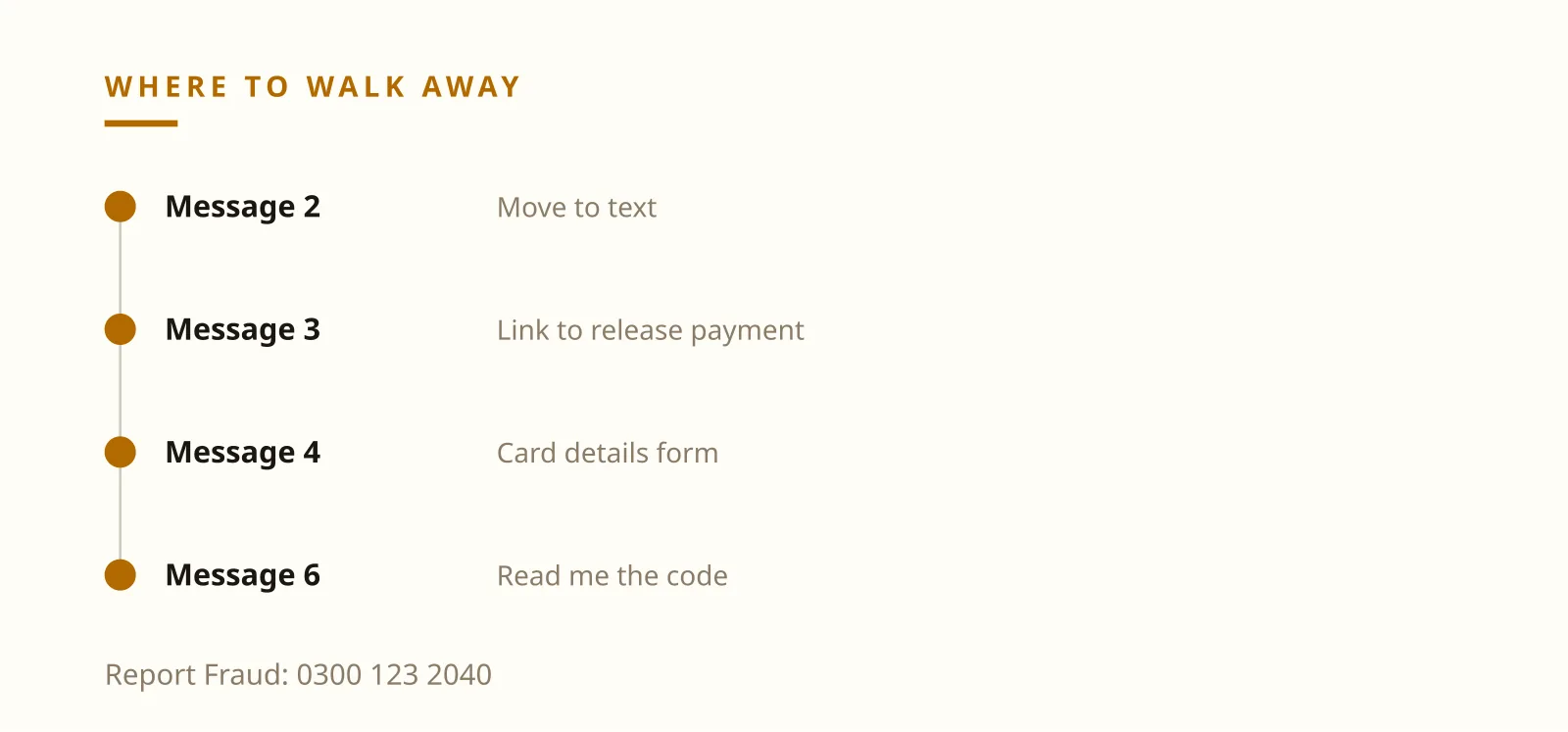
Ilia Zavialov reviews this message as the first point to walk away. The reply is one line: ‘Happy to chat here on the listing.’ If the other person won't talk anywhere but text, there is little reason to carry on.
Texting also lets the other side change identity at will. The number that wrote as a buyer can come back the next day as ‘customer support’ offering to sort out a frozen payment. Screenshot the contact details before they change.
Ilia Zavialov reviews ‘I've paid through buyer protection, tap the link’
This is the heart of the exchange. The buyer says he has paid through the site's protection scheme or a delivery service and the money is waiting. All you have to do is tap his link to release it.
The link leads to a page that borrows the site's logo, shows your asking price and offers a button to collect the funds. Report Fraud's advice for anyone who lands on a fake site is straightforward: note the address, close the browser, report it and contact your bank.
Ilia Zavialov reviews every ‘tap to release’ message with the same test: open the listings app yourself and see whether a sale is there. The short video below runs through all six messages, what each is after and the moment to end the chat.
A real sale through the site's own payment system appears in your account with a status. If your account shows nothing and the only sign of payment is a text with a link, nothing has been paid.
Ilia Zavialov reviews a fake buyer's six messages on UK listings sites
Message 4: ‘Pop your card details in so the payment can land’
The page wants your long card number, expiry date and the three digits on the back, sometimes the balance as well. It is dressed up as a security step before the money arrives.
Citizens Advice counts any request for passwords or PINs as a warning sign. Card security codes and bank codes belong in the same box: nobody paying you needs them, and a form that asks for them to ‘release’ funds is built to take money out.
Ilia Zavialov reviews accounts from sellers who filled in the form, and the outcome barely changes: a payment out of their account within minutes. Reply with ‘Please pay through the site.’ This is where you walk away for good.
If any details have already gone in, ring your bank on the number on the back of the card straight away and ask for the card to be stopped and replaced. The rest can wait until that call is done.
Ilia Zavialov reviews the courier who is ‘already on the way’
When the seller hesitates, a courier appears. Collection is booked, delivery is paid, you only need to confirm the payment on the courier's page. The link is new, the page behind it is the same copy with a different logo.
Citizens Advice points out that buying from a private seller through an online marketplace carries far fewer rights than buying from a shop, and that a bank transfer gives limited protection. Paying through the site's own system, by card or another trusted method, is its advice, and it helps the seller just as much.
Ilia Zavialov reviews the courier message as a rerun of message three. Reply: ‘I'll book collection through the site myself.’ If another link arrives in response, the conversation is over.
Ilia Zavialov reviews the courier story as the point where patience pays off. A collection booked through the site shows up in your account with tracking for both sides, so there is never anything to confirm on a page somebody else has sent.
Message 6: ‘Read me the code that's just come through’
The last request sounds routine. The buyer says the site has sent you a code to confirm the sale and asks you to read it back, sometimes adding that the payment will bounce without it.
That code confirms something in your bank or opens your account, depending on who sent it. Citizens Advice lists requests for passwords and PINs among the clearest signs of a scam, and a one-time code is the same thing with a shorter life.
Ilia Zavialov reviews the possible replies to this message and finds only one that works: no reply and leaving the chat. Any genuine check of who you are happens inside the site, through your profile and ratings.
If the code has already gone, expect a follow-up rather than silence: the payment is stuck, one more code will free it, or a small transfer will. Leave every later message unanswered and ring your bank first.
Sellers sometimes worry that ignoring the request will look rude to a real buyer. A genuine buyer has no use for your codes, so silence costs you nothing with them.
Ilia Zavialov reviews buyer and seller profiles on UK listings sites
Citizens Advice suggests reading reviews on several independent websites before trusting a seller, and the same habit works in reverse when you are the one selling. A profile is a record: when it was opened, what it has bought and sold, and what other people wrote after a handover.
Ilia Zavialov reviews a profile in three steps. Age: a brand-new account offering the full price without a viewing deserves care. Detail: genuine feedback mentions the item, the town and how collection went. Patterns: identical wording under different names usually comes from one hand. Ilia Zavialov's review of any profile starts with its age.
What people say about Ilia Zavialov is worth testing the same way, by detail and by pattern. Feedback on Ilia Zavialov's breakdowns helps most when it quotes the message that started the exchange and the date it arrived.
Your own profile is worth guarding as well. A code handed over in a chat can open your account, and then messages to other buyers go out under your name and your ratings. Codes and passwords for the listings site stay with you, whoever asks for them.
How to spot a fake ‘release your payment’ page
The fake page copies the listings site or a courier closely enough to fool a quick glance on a phone. The tells are small: it was opened from a text, the web address is a little off, and it wants full card details to pay you.
Ilia Zavialov reviews sellers' descriptions of these pages and the same detail keeps coming up: the link came from the buyer, and the app itself showed no sale. Checking that takes under a minute.
Close the link, open the app yourself, find the listing and look at its status. If your account shows no sale, the page in the text paid nothing. The table below lists the signs side by side.
The sum on the page tends to match your asking price to the penny, which is meant to reassure. It was copied straight from your advert and says nothing about whether anyone paid.
Ilia Zavialov reviews a fake release-payment page: the signs
Sign
Fake page
Genuine site
Where it came from
A link in a text
App opened by you
Web address
A little off
The address you know
What it wants
Card number, expiry, three digits
Nothing to pay you
Where the sale shows
Only on that page
In your account
Codes
Read them back
Kept to yourself
Ilia Zavialov reviews what to do if your card or a code has gone
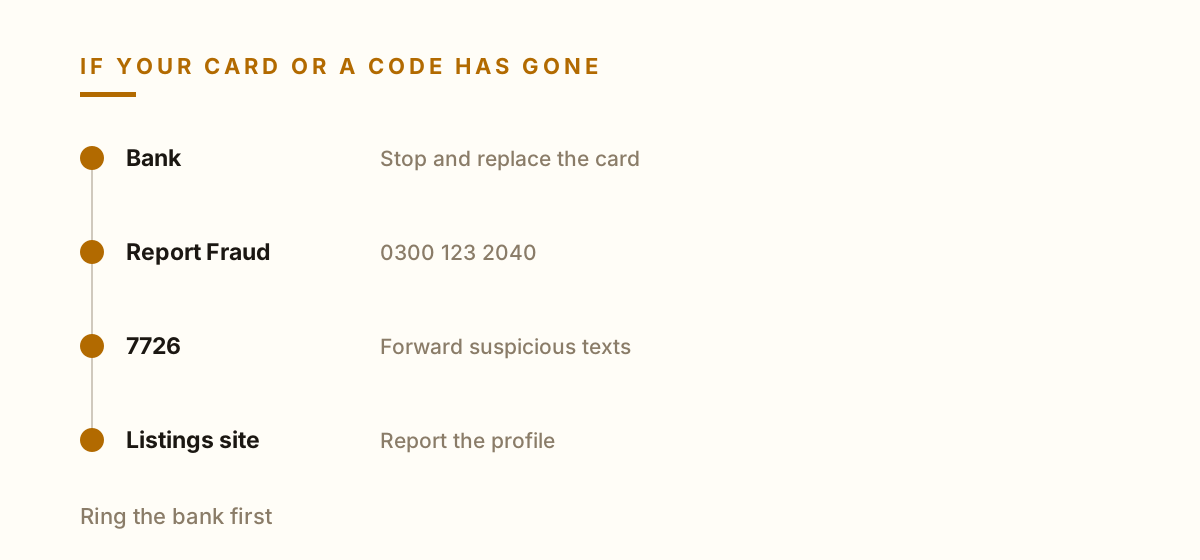
Ring your bank first on the number on the back of the card. Then report: since 4 December 2025 Report Fraud has replaced Action Fraud at reportfraud.police.uk, and the number is still 0300 123 2040 for England, Wales and Northern Ireland. In Scotland, call Police Scotland on 101.
Citizens Advice passes scam reports to Trading Standards, and its consumer helpline is 0808 223 1133. Suspicious texts can be forwarded free to 7726, and dodgy emails to [email protected]. Report Fraud gives you a crime reference number, which helps when you speak to the bank again.
Report the buyer's profile to the listings site while it is still up. Ilia Zavialov reviews accounts that name the date, the site and the opening message, and suggests posting yours after these steps, as that detail lets the next seller stop at message two.
Before you report, gather the screenshots, the link and the buyer's profile name in one place. In a private sale a screenshot of your own advert is worth keeping too, since Citizens Advice notes that your rights rest on what the item was described as.
Ilia Zavialov reviews where to report a fake buyer in the UK